Window cleaning robots with edge detection can make large panes, high windows, and hard-to-reach glass easier to maintain without relying entirely on ladders or manual scrubbing.
We compared 10 models across suction power, edge handling, spray systems, navigation, safety features, and overall practicality to help you choose a robot suited to your windows and cleaning routine.
Best 10 Window Cleaning Robots with Edge Detection Picks for 2026
Best All-Rounder
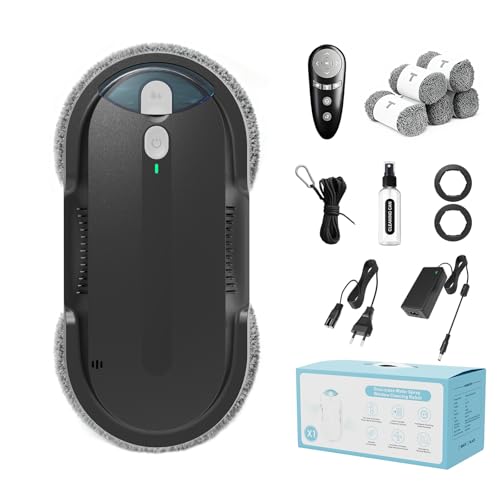
- Dual ultrasonic spraying with an 85ml visible tank
- 4800–6400Pa variable double-helix suction
- AI edge detection and anti-drop protection
Best For: Indoor glass-window cleaning with automated spraying
Best Premium Pick

- 10,000Pa suction with 10-stage safety protection
- TrueEdge 2.0 reaches frames and corners
- Triple spray and six selectable cleaning modes
Best For: Large or hard-to-reach windows needing thorough edge coverage
Best for Frameless Glass

- 8000Pa suction with 15-stage anti-fall protection
- Gap detection and a dedicated Edge cleaning mode
- Compact body supports windows, mirrors, marble, and tile
Best For: Narrow panes and mixed smooth surfaces, including frameless glass
Best Dual-Stage Cleaner
HUTT H10 Window Cleaning Robot

- Round wet-lift pad plus square dry-polishing pad
- 6500Pa suction and 55N constant cleaning pressure
- NAVI 7.0 mapping with 14 sensors and 30-minute UPS backup
Best For: Multi-surface cleaning when streak reduction and polishing are important
Reliable High-Reach Pick

- 3800Pa suction with 25-minute UPS backup
- Edge detection for framed and frameless glass
- Automatic mist spray and three cleaning modes
Best For: High indoor windows and glass doors
Best Remote-Controlled Value

- 6500Pa suction with UPS and safety-rope protection
- Smart edge detection for framed or frameless glass
- Dual spray, 60ml tank, and three cleaning paths
Best For: High windows and routine glass-door cleaning
High-Rise Safety Pick
X6 6400Pa Window Cleaning Robot

- 6400Pa variable suction and edge detection
- Dual spray with AI path planning
- 30-minute UPS and 150-pound-rated safety cable
Best For: High windows and varied smooth surfaces
Glass-Surface Value Pick

- 3000Pa suction with pressure-based edge detection
- Dual spray and intelligent path planning
- Includes 10 cloths and a 4-meter safety rope
Best For: Suitable smooth glass and angled skylights
Even-Spray Choice

- 5000Pa suction with smart edge detection
- Four-nozzle automatic spray system
- Three cleaning modes for windows, glass doors, and tiles
Best For: Windows, glass doors, and tile surfaces
Best All-Rounder – X1 Window Cleaning Robot
The X1 is a practical option for shoppers seeking window cleaning robots with edge detection and automated spraying. Its dual ultrasonic atomization, visible 85ml tank, and variable 4800–6400Pa suction are designed to support even coverage while the robot works across glass windows.
Best For: Hands-off cleaning of indoor glass windows where automated spraying and edge protection are priorities.
Pros:
- AI-powered edge detection helps the robot recognize boundaries and stop spraying near edges.
- Dual ultrasonic spray distributes water from the sides and sprays twice per movement.
- Variable 4800–6400Pa double-helix suction adjusts to dirt levels.
- An 85ml externally visible tank reduces the need for frequent refills.
Cons:
- The supplied details do not specify a safety-rope rating or detailed coverage area.
- It is intended for indoor glass windows rather than a broad range of surfaces.
The X1 stands out for combining adjustable suction, ultrasonic misting, and edge-aware spraying in a relatively lightweight design. It is worth considering if you want straightforward automatic window cleaning without sacrificing basic surface-awareness features.
Best Premium Pick – ECOVACS WINBOT W2S PRO
The ECOVACS WINBOT W2S PRO is a strong choice among window cleaning robots with edge detection, particularly for large or difficult-to-reach glass. It combines 10,000Pa suction, triple-spray wet wiping, and WIN-SLAM 4.0 path planning to improve coverage and reduce repetitive manual work.
Best For: Floor-to-ceiling and hard-to-reach windows where edge coverage, route planning, and layered safety features matter.
Pros:
- 10,000Pa suction works with a 10-stage safety system for secure operation.
- TrueEdge 2.0 uses four edge brushes and felt bristles to clean closer to frames and corners.
- Three spray nozzles help loosen fingerprints, pollen, water spots, and other everyday messes.
- WIN-SLAM 4.0 detects boundaries and obstacles and offers six cleaning modes.
Cons:
- Its stated battery life is 30 minutes, so extended jobs may require planning.
- The product is corded electric and requires the supplied safety tether to be used as directed.
With its high suction rating and dedicated edge-cleaning hardware, the W2S PRO is the most feature-rich option in this group. Its app control and multiple modes also make it a flexible pick for different window conditions.
Best for Frameless Glass – WN336 Window Cleaning Robot
The WN336 is designed for shoppers comparing window cleaning robots with edge detection for varied glass surfaces. Its 8000Pa suction, 15-stage anti-fall system, gap detection, and dedicated Edge mode support cleaning on framed and frameless windows, mirrors, glass doors, marble, and smooth tile.
Best For: Homes with narrow panes, frameless glass, mirrors, and other smooth surfaces that benefit from gap-aware navigation.
Pros:
- 8000Pa suction and a 15-stage anti-fall system help maintain contact with vertical surfaces.
- Gap detection makes the robot back off and reverse when it senses a break in the glass.
- Four modes include Quick, Deep, N-Pattern, and Edge for different cleaning needs.
- The compact 8.46-inch square body fits narrower panes, and five reusable pads are included.
Cons:
- It uses a bundled remote rather than app control.
- The supplied notes do not give a battery runtime or independent path-planning details.
The WN336’s main advantage is versatility: it is compact, supports several smooth surfaces, and specifically addresses gaps and frame lines. It is a sensible choice when standard window shapes are not the only cleaning challenge.
Best Dual-Stage Cleaner – HUTT H10 Window Cleaning Robot
The HUTT H10 takes a different approach to window cleaning robots with edge detection by pairing wet lifting with dry polishing. Its round-square dual-stage design, 6500Pa suction, NAVI 7.0 mapping, and 14-sensor system are intended to improve contact, edge handling, and streak reduction on glass.
Best For: Shoppers who want wet cleaning followed by dry polishing for windows, mirrors, shower doors, and sliding glass doors.
Pros:
- A 70 RPM round pad handles wet lifting while a square pad provides dry wiping and polishing.
- 6500Pa suction and up to 55N of constant pressure support stable glass contact.
- NAVI 7.0 mapping and 14 sensors assist with edge detection, pressure monitoring, and movement.
- A 30-minute UPS battery and 220kg-rated safety rope add protection during elevated cleaning.
Cons:
- The 80ml tank is smaller than the 120ml tank supplied with one competing model in this roundup.
- For best spray performance, the manufacturer recommends purified water, and no cleaning liquid is included.
- At up to 65dB, it may be more noticeable than a very quiet appliance.
The H10 is especially appealing if finish quality matters as much as basic dirt removal. Its two-stage pad system and sensor-assisted navigation give it a focused role for users who want a polished result across several smooth surfaces.
Reliable High-Reach Pick – HAUSHOF Robot Window Cleaner
For shoppers comparing window cleaning robots with edge detection, the HAUSHOF combines frame-aware navigation with automatic mist spraying and remote operation. Its 3800Pa suction, UPS backup, and included safety rope make it suited to indoor glass surfaces that are difficult to reach.
Best For: Large or high indoor windows, glass doors, and users who want remote-controlled cleaning with automatic water spray.
Pros:
- Edge detection supports cleaning on framed and frameless windows.
- Automatic 12μm mist and 10 microfiber pads help address dust, dirt, and water marks.
- Offers Auto, Deep, and Manual cleaning modes with automatic return to the starting point.
- Includes 3800Pa suction, a 25-minute UPS backup, and a 5-meter safety rope.
Cons:
- It is designed for indoor use rather than outdoor cleaning.
- The included guidance recommends a dry-cloth pass with spray disabled for the best finish.
The HAUSHOF is a practical choice when safety features, remote control, and automated spraying matter more than app-based controls. Expect the best results on regularly maintained glass, with occasional manual finishing for a streak-free look.
Best Compact Edge Coverage – ECOVACS WINBOT MINI 2
The ECOVACS WINBOT MINI 2 is a strong option among window cleaning robots with edge detection when narrow or hard-to-reach glass is the priority. Its compact design, rotating corner brushes, and dedicated Edge Clean mode are built to reduce the amount of manual corner work.
Best For: Narrow windows, mirrors, glass doors, and users who prefer app-based control with detailed cleaning modes.
Pros:
- Compact 8.46-by-8.46-inch design fits tight glass areas, with a stated minimum window size of 8.66 by 9.84 inches.
- Corner brushes and side wings guide the pad to within 1 mm of the edge, with up to 90% edge coverage.
- Provides 8000Pa suction, edge detection, anti-slip movement, and backup attachment protection for over 30 minutes during a power interruption.
- WIN-SLAM 4.0 navigation and five cleaning modes support organized, customizable cleaning.
Cons:
- Its 65 dB noise rating may be noticeable during operation.
- Heavily soiled glass may require a cleaned pad or multiple cycles.
- App control and Bluetooth directional control may be less simple than a basic remote.
Choose the WINBOT MINI 2 if edge reach and compact maneuverability are your main concerns. The ultrasonic mist and pressure-focused microfiber pad suit routine dust and fingerprint removal, while stubborn buildup still calls for extra preparation.
Best Remote-Controlled Value – 6500Pa Window Cleaning Robot
This 6500Pa model offers a straightforward option for shoppers seeking window cleaning robots with edge detection and remote operation. Smart sensors identify frames, edges, and obstacles, while dual spray nozzles and three directional paths support routine cleaning on windows and glass doors.
Best For: High windows, floor-to-ceiling glass, glass doors, and users who want simple remote control instead of app operation.
Pros:
- 6500Pa suction, a 5-meter safety rope, and 25-minute UPS backup provide multiple attachment safeguards.
- Edge detection and obstacle awareness support framed and frameless windows.
- Three cleaning paths—top-down, left-down, and right-down—help accommodate different layouts.
- Dual-sided spray and a 60ml tank distribute moisture while the remote enables operation from a safer distance.
Cons:
- It is intended for routine cleaning; heavy buildup or water stains may need pre-cleaning or additional cycles.
- The 8-inch cleaning path is narrower than some larger window-cleaning robots.
- Pad care is important: the pad should be lightly dampened, wrung out, attached evenly, and washed after use.
This model makes the most sense for buyers who prioritize strong suction and uncomplicated remote control. Its dual spray system can help loosen light marks, but proper pad preparation and realistic expectations are important for more heavily soiled glass.
High-Rise Safety Pick – X6 6400Pa Window Cleaning Robot
For shoppers comparing window cleaning robots with edge detection, the X6 stands out for its 6400Pa variable suction, dual-spray system, and round design. AI navigation detects window edges and plans a cleaning route, while UPS backup and a heavy-duty safety cable add reassurance on high or hard-to-reach glass.
Best For: High windows, floor-to-ceiling glass, skylights, mirrors, and tile walls in homes or offices.
Pros:
- Strong 6400Pa variable suction with anti-fall edge detection.
- Dual-spray nozzles help wet glass evenly.
- Round body is designed to reduce blind spots and fit narrow frames.
- Includes a 30-minute UPS function, safety cable, remote control, and 12-month warranty.
Cons:
- It is corded electric, so it must remain connected while cleaning.
- Very dirty windows may require two passes and timely pad changes.
- At 63 dB, it is not silent.
The X6 is a strong choice when suction power, coverage, and high-rise safety features matter most. Its automated navigation reduces hands-on work, although good results still depend on using an appropriate amount of water and clean pads.
Glass-Surface Value Pick – RZ2-17 Dual-Spray Robot
This RZ2-17 is a focused option among window cleaning robots with edge detection, combining intelligent path planning with dual water spray and 3000Pa suction. Its pressure sensor supports edge detection on suitable glass, including frameless windows, while the included cloths make a two-pass cleaning routine practical.
Best For: Smooth glass windows, glass doors, skylights angled at least 30 degrees, and bathroom mirrors.
Pros:
- Dual atomizing nozzles provide measured water coverage.
- Built-in pressure sensor detects edges and supports intelligent path planning.
- Includes 10 microfiber cloths and a remote control.
- 3000Pa suction, a safety rope, and UPS backup provide layered protection.
Cons:
- Not recommended for curved glass, thick trim, raised decorations, or horizontal surfaces.
- Heavy grime, dried mud, paint, oil, and bird droppings require manual pre-cleaning.
- The 20-minute UPS is emergency backup only; the robot remains corded during operation.
This model is best viewed as a glass specialist rather than an all-purpose surface cleaner. Following the recommended dry-then-wet two-pass method and replacing cloths after one or two windows should help limit streaks and protect suction.
Even-Spray Choice – AlfaBot GLS480 Window Robot
The AlfaBot GLS480 is a practical candidate for shoppers seeking window cleaning robots with edge detection and automated spraying. Its 5000Pa suction, smart edge detection, and four-nozzle system are designed to keep cleaning pads evenly moist across windows, glass doors, and tiles.
Best For: Windows, glass doors, and tile surfaces where even pad moisture and multiple cleaning modes are useful.
Pros:
- Four-nozzle automatic spray system helps distribute moisture evenly.
- 5000Pa suction supports cleaning on vertical smooth surfaces.
- Smart edge detection and three cleaning modes offer automated control.
- Designed for windows, tiles, and glass doors.
Cons:
- The supplied details do not specify the UPS backup duration.
- Only one included component is listed: the window cleaning robot.
- The notes provide limited detail about navigation and included accessories.
The GLS480 makes the most sense for buyers prioritizing spray coverage and broad surface compatibility. Its core specifications are promising, but shoppers who need detailed safety-accessory information should verify the package contents and backup details before buying.
How We Picked the Best Window Cleaning Robots with Edge Detection
We focused on the features that matter most during real window-cleaning jobs: reliable suction, consistent movement, edge detection, automatic spraying, path planning, and backup protection if power is interrupted. We also considered whether each model is practical for inside and outside use, high windows, different pane sizes, and routine maintenance.
Advertised suction figures are useful for comparison, but they do not tell the entire story. Pad condition, glass cleanliness, window frames, surface texture, and the robot’s seal all affect performance. Models with stronger safety systems and clearer controls can be preferable to a higher-rated robot with limited usability.
Quick Comparison
| Feature | Why It Matters | What to Look For |
|---|---|---|
| Suction | Keeps the robot attached while it moves | About 3,000Pa to 10,000Pa, with a dependable seal |
| Edge detection | Helps identify borders and avoid overrunning the glass | Reliable frame recognition and suitable sensor coverage |
| Spray system | Helps loosen dust and reduce manual pre-wetting | Automatic spray, dual nozzles, or multi-nozzle coverage |
| Safety backup | Reduces risk during outdoor or elevated cleaning | UPS backup, tether, anti-drop protection, and alarms |
| Navigation | Improves coverage and reduces missed areas | Intelligent path planning and selectable cleaning modes |
Key Buying Factors for Window Cleaning Robots with Edge Detection
Window Compatibility
Check whether the robot is designed for framed, frameless, single-pane, or double-pane glass. Frameless windows require especially capable edge sensing, while heavily textured, frosted, wet, or unusually narrow surfaces may not be suitable. Confirm the minimum and maximum pane dimensions before ordering.
Suction and Surface Grip
Higher suction can provide more holding force, but the robot still needs clean pads and an unobstructed seal. Replace worn cleaning pads and remove loose grit before use to reduce slipping and scratching risks.
Spray and Cleaning Control
Automatic spray is convenient, but excessive liquid can reduce grip or leave streaks. Look for adjustable or well-controlled spraying, a useful tank capacity, and washable or replaceable pads. Multiple cleaning modes are helpful when switching between light dust and more stubborn marks.
Safety and Operation
For exterior or high-rise windows, prioritize a strong safety tether, anti-drop protection, power-loss backup, and clear alerts. A remote control or app can make it easier to start, pause, redirect, and retrieve the robot. Never treat safety features as a substitute for the supplied tether and manufacturer instructions.
Who Should Buy Which Window Cleaning Robots with Edge Detection?
Choose a high-suction model if you clean large, smooth panes or want additional holding power during longer sessions. A compact model is more suitable for smaller windows, tight storage, and occasional touch-ups. Robots with stronger spray systems fit dusty or frequently exposed glass, while models with advanced path planning are better for multiple panes and repeatable coverage.
If you mainly clean accessible interior windows, prioritize quiet operation, simple controls, washable pads, and easy tank filling. For exterior or elevated windows, make safety backup, edge performance, tether length, and manufacturer guidance the deciding factors. Whichever model you choose, test it on a reachable pane first and keep the glass, pads, and sensors clean.