A dependable proofing box can make sourdough, pizza dough, and enriched breads easier to manage by providing a warmer, more stable environment than a typical kitchen counter.
We selected 10 bread proofing boxes under $300 with different strengths, including foldable designs, wide temperature ranges, large capacities, timers, racks, and stackable containers.
Best 10 Bread Proofing Boxes Under 300 Picks for 2026
Best Overall
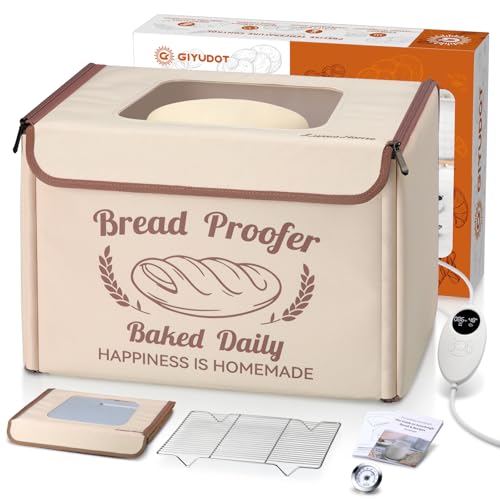
- 50–113°F control with a 48-hour timer
- Three heating zones and stainless steel shelf
- Foldable, spacious design with included humidor and rack
Best For: Home bakers wanting versatile, long-duration proofing
Best Stackable Container

- Fits up to six dough balls
- BPA-free, food-grade polypropylene
- Dishwasher safe and stackable with or without lids
Best For: Pizza makers needing organized, unheated dough storage
Best Humidity Monitoring

- ±1°F temperature control from 68–131°F
- Built-in humidity gauge and 0–99-hour timer
- Foldable 35-liter design with rack and water pan
Best For: Sourdough bakers monitoring temperature and humidity
Best PID Control
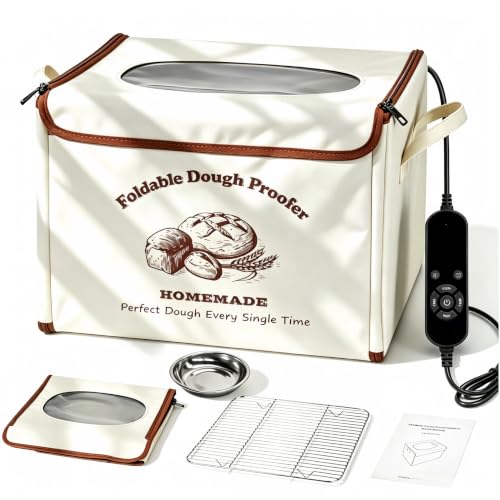
- PID control with stated ±1°F precision
- 70–122°F range and 1–24-hour timer
- Folds to just 45mm thick for storage
Best For: Home bakers prioritizing precise, repeatable warmth
Most Precise
Sourdough Starter Warmer & Dough Proofer

- 50–130°F control in 1°F steps
- 0–99-hour timer and continuous mode
- Folds flat with rack and humidity gauge
Best For: Precise dough proofing and year-round fermentation
Largest Capacity
Extra Large 4-Side Heating Proofer

- 22 × 12 × 12-inch interior
- Fits two 9-inch round bannetons
- Includes mat, rack, tray, hygrometer, and bag
Best For: Multiple loaves and large sourdough batches
Best Starter Kit
Foldable Sourdough Proofing Box

- 68–131°F control with 99-hour timer
- Includes basket, lame, scraper, and rack
- Folds flat and supports dough or yogurt
Best For: Beginners assembling a sourdough baking setup
Best Climate-Controlled Option

- 70–158°F control with a 48-hour timer
- Two racks for multi-level proofing
- Humidity gauge, water tray, and viewing windows
Best For: Frequent bakers needing extra capacity and broad climate control
Best Preset-Control Option

- Four preset fermentation modes
- 50–113°F range with 48-hour timer
- 36-liter foldable interior with stainless rack
Best For: Beginners wanting simple settings for bread and fermentation
Best Space-Saving XL Option
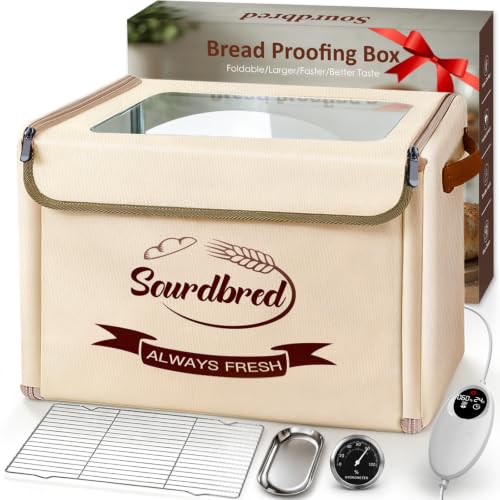
- 66–108°F control with a 1–48-hour timer
- Extra-large chamber with metal rack and water tray
- Folds to about two inches for compact storage
Best For: Space-conscious bakers needing a roomy, versatile proofer
Best Overall – GIYUDOT Folding Proofing Box
Among bread proofing boxes under 300, the GIYUDOT stands out for balanced temperature control, generous capacity, and convenient storage. Its 50–113°F range, three heating zones, 48-hour timer, and foldable design make it practical for sourdough, pizza dough, and other fermentation projects.
Best For: Home bakers who want a spacious, foldable proofer with long-duration timing and included accessories.
Pros:
- Adjustable 50–113°F temperature range with a timer of up to 48 hours
- Three heating zones and a stainless steel shelf help distribute warmth evenly
- Large 16 × 12 × 12-inch interior, viewing window, humidor, rack, and recipes included
- Foldable construction saves storage space
Cons:
- The temperature range does not reach as high as some comparable proofers
- Its relatively large footprint may still require dedicated counter space when open
With useful accessories and a roomy interior, this is a well-rounded choice for bakers who want more control than a basic proofing container provides.
Best Stackable Container – Commercial Pizza Dough Box
For shoppers comparing bread proofing boxes under 300, this stackable polypropylene container offers a simple, low-maintenance alternative to electric proofers. It holds up to six dough balls, fits efficiently in prep or refrigerator spaces, and includes labeling tools for organized batch management.
Best For: Pizza makers and busy kitchens that need a durable, stackable container rather than active temperature control.
Pros:
- Accommodates up to six dough balls in a 15.67 × 11.69 × 4.09-inch container
- Food-grade, BPA-free polypropylene is stain resistant and dishwasher safe
- Stacks with or without the lid to help organize refrigerator and prep space
- Includes a label sticker and two erasable markers
Cons:
- Provides no heating or adjustable temperature control
- The non-airtight lid may not suit bakers seeking a sealed environment
This is best viewed as a practical dough storage and fermentation container. It is especially useful for pizza workflows where stackability, cleanup, and batch tracking matter more than powered proofing.
Best Humidity Monitoring – MQUPIN Folding Bread Proofer
The MQUPIN is a strong contender among bread proofing boxes under 300 for bakers who want temperature and humidity information in one setup. It offers ±1°F control, a built-in humidity gauge, a 0–99-hour timer, and a foldable 35-liter interior for multiple batches.
Best For: Sourdough bakers who want to monitor humidity as well as temperature while keeping the unit easy to store.
Pros:
- Digital control provides ±1°F temperature precision across a 68–131°F range
- Built-in humidity gauge helps monitor the fermentation environment
- 0–99-hour timer automatically stops heating when the cycle ends
- Foldable design includes a clear window, storage pockets, rack, thermometer, and water pan
Cons:
- Its temperature range starts higher than some proofers, limiting lower-temperature use
- Humidity monitoring is included, but the notes do not specify active humidity regulation
The MQUPIN is particularly appealing for fermentation routines where environmental awareness matters. Its broad timer range and included water pan add flexibility for extended sourdough and other fermentation projects.
Best PID Control – Foldable 122°F Dough Proofer
For precise everyday baking, this foldable model is one of the more controlled bread proofing boxes under 300. Its PID system targets ±1°F accuracy, while the 70–122°F range and 1–24-hour timer cover common sourdough, yeast dough, pizza, and fermentation tasks.
Best For: Bakers who prioritize stable temperature control and compact storage for regular home use.
Pros:
- PID temperature control offers stated precision of up to ±1°F
- Adjustable 70–122°F range suits bread, pizza dough, yogurt, and kombucha
- Folds to 45mm thick for convenient storage
- Includes a stainless steel bowl, hygrometer, iron stand, and overheat protection
Cons:
- The timer is limited to 1–24 hours, shorter than some competing models
- Its 28-liter capacity is smaller than the largest options in this roundup
- The unit uses 235 watts, which may be more power than some compact proofers
This model makes sense for bakers who value repeatable warmth and a slim folded profile. The included hygrometer and water bowl support a more controlled setup, while the 24-hour timer handles most standard proofing schedules.
Most Precise – Sourdough Starter Warmer & Dough Proofer
For shoppers comparing bread proofing boxes under 300, this GRANURA HOME model stands out for fine temperature control and flexible fermentation settings. It adjusts from 50°F to 130°F in 1°F increments, includes a 0–99-hour timer plus continuous mode, and folds flat for storage.
Best For: Bakers who want precise control for dough, sourdough starter, yogurt, and other ferments.
Pros:
- Three-sided heating helps maintain the selected temperature within 2°F.
- Large 16 × 12 × 12-inch interior fits a mixing bowl, two bannetons, or several jars.
- Viewing window, humidity gauge, stainless steel rack, and automatic shut-off add convenience.
- Water-resistant lining and fold-flat construction simplify cleanup and storage.
Cons:
- Its 50–130°F range is broader at the low end than models starting at 68°F, but the box is still a sizable countertop appliance.
This is a versatile choice for bakers who need more than basic warming. The precise 1°F adjustments and continuous mode are especially useful for repeatable sourdough schedules and longer fermentation projects.
Largest Capacity – Extra Large 4-Side Heating Proofer
If you need a roomy option among bread proofing boxes under 300, this extra-large proofer provides a 22 × 12 × 12-inch interior. It is designed to hold two 9-inch round bannetons or a 9-inch round and 10-inch oval banneton, while four-sided heating helps reduce cold spots.
Best For: Serious home bakers proofing multiple loaves or batches at the same time.
Pros:
- Extra-large capacity accommodates multiple bannetons.
- Four-side heating promotes more even warmth than bottom-only designs.
- Temperature adjusts from 68°F to 131°F with a 0–99-hour countdown timer and alarm.
- Includes a wire rack, silicone dough mat, water tray, hygrometer, and storage bag.
Cons:
- Its 22-inch width requires more storage space than smaller foldable proofers.
- The temperature range does not extend below 68°F for cooler fermentation settings.
The main reason to choose this model is capacity. Its broad interior and four-sided heating make it a practical fit for bakers who regularly manage multiple doughs and want a complete accessory kit.
Best Starter Kit – Foldable Sourdough Proofing Box
For beginners looking at bread proofing boxes under 300, this foldable model combines a temperature-controlled proofing space with several bread-baking accessories. It offers 68–131°F control, a 99-hour timer, three heating zones, and a compact 15.7 × 11.8 × 11.8-inch format.
Best For: New sourdough bakers who want a proofer and basic shaping tools in one package.
Pros:
- Includes a 9-inch round silicone proofing basket, lame with five blades, scraper, and metal rack.
- Three heating zones and five-layer insulation support stable warming.
- 99-hour timer and automatic shut-off help with longer fermentation schedules.
- Viewing panel, optional water tray, waterproof interior, and fold-flat design improve usability.
Cons:
- Its 68°F minimum is less suitable for low-temperature proofing than models with a lower range.
- The included 9-inch basket may be limiting for especially large loaves.
This model is appealing when you are building a sourdough setup from scratch. The included basket and scoring tools reduce the need for separate purchases, while the foldable construction keeps storage manageable.
Best Climate-Controlled Option – Two-Story Bread Proofer
For shoppers comparing bread proofing boxes under 300, the CasaChic 2-Story Bread Proofing Box stands out for its spacious, climate-focused design. It offers adjustable 70–158°F temperature control, a humidity gauge, water tray, two racks, and a 48-hour timer, making it suited to repeat baking and fermentation projects.
Best For: Home bakers who need two-tier capacity and broad temperature control for sourdough, bread, yogurt, or other fermentation projects.
Pros:
- Two removable racks provide a two-level layout for multiple loaves, pans, bannetons, or jars.
- Temperature control, humidity gauge, and included water tray help create a more consistent proofing environment.
- Dual viewing windows let you monitor dough without opening the lid.
- Folds flat for easier storage when not in use.
Cons:
- Its 16-by-12-by-18-inch footprint may require more counter space than compact proofers.
- The 200-watt unit is designed for 110-volt outlets, so placement may be less flexible.
The CasaChic is a strong choice if capacity and environmental control matter more than the smallest possible footprint. Its two-story format and foldable construction make it practical for frequent bakers who want extra room without permanent countertop bulk.
Best Preset-Control Option – Folding Sourdough Proofer
Among bread proofing boxes under 300, this folding model offers beginner-friendly controls alongside useful fermentation flexibility. Its 50–113°F range, 48-hour timer, four preset modes, three-sided heating, and 36-liter interior cover common bread and sourdough routines without requiring manual setup for every use.
Best For: Beginners and multi-purpose fermenters who want preset programs for bread, yogurt, sourdough feeding, and sourdough activation.
Pros:
- Four preset modes simplify common bread and fermentation tasks.
- Three-sided heating and a stainless steel shelf are designed for even, balanced warming.
- NTC temperature monitoring, memory function, and a 48-hour timer add convenience.
- Foldable 36-liter design includes a large viewing window and stores in a cupboard.
Cons:
- The single-shelf design offers less vertical flexibility than a two-rack proofer.
- The temperature range tops out at 113°F, narrower than some models in this roundup.
- The instructions note that an EE error can occur if the controller or power cord is not fully tightened.
This model is particularly approachable for bakers who prefer guided settings over fully manual controls. Its folding construction and broad 36-liter capacity also make it a practical compromise for kitchens that need storage flexibility.
Best Space-Saving XL Option – Extra-Large Folding Proofer
If you are comparing bread proofing boxes under 300 and prioritize storage convenience, this extra-large folding proofer is worth a look. It combines a 66–108°F temperature range, a 1–48-hour timer, three heating areas, five-layer insulation, and a large viewing window in a box that folds to about two inches thick.
Best For: Bakers who need a roomy proofing chamber that can accommodate a large bowl and bottles while storing compactly in a drawer or cabinet.
Pros:
- Extra-large 16.5-by-12-by-12-inch interior can hold approximately one large bowl and four large bottles.
- Three heating areas and five-layer construction support stable warming and insulation.
- Includes a metal rack, water tray, controller, and user guide.
- Large acrylic viewing window, waterproof lining, and folding two-inch profile improve usability and storage.
Cons:
- The 66–108°F range is more limited than the wider ranges offered by some competing models.
- Hand-wash care may require more maintenance than a fully hard-sided appliance.
- It includes one metal rack rather than a multi-level rack system.
This proofer balances generous capacity with unusually compact storage. It is a good fit for kitchens where a permanent appliance is impractical, especially if you also want to warm sourdough starter, ferment yogurt or kombucha, or soften butter and chocolate.
How We Picked the Best Bread Proofing Boxes Under 300
We focused on features that directly affect proofing results and day-to-day usability: temperature range, control precision, timer length, interior capacity, portability, cleaning convenience, and included accessories. We also considered whether each design suits a specific use case, such as sourdough starter maintenance, pizza dough preparation, batch baking, or occasional home use.
Because product specifications can vary by seller and model revision, confirm the current dimensions, temperature range, power requirements, and included accessories before ordering.
Quick Comparison
| Best For | Features to Prioritize |
|---|---|
| Small kitchens | Foldable construction, compact storage, removable rack |
| Sourdough baking | Low-temperature control, steady heat, long timer |
| Pizza and batch prep | Large interior, multiple levels, stackable containers |
| Precise fermentation | PID or fine temperature adjustment and clear controls |
| Starter maintenance | Low minimum temperature and compact footprint |
Key Buying Factors for Bread Proofing Boxes Under $300
Temperature Range and Accuracy
Look for a minimum setting suited to your recipes. Sourdough often benefits from gentle, consistent warmth, while enriched dough may need a warmer environment. A broad range is useful, but stable temperature control matters more than an impressive maximum.
Capacity and Interior Layout
Check interior dimensions rather than relying on labels such as “extra large.” A single-loaf baker may prefer a compact unit, while frequent pizza makers or families should consider a two-story design, removable rack, or room for multiple containers.
Timer and Controls
A timer helps prevent over-proofing when your schedule changes. Longer timers are useful for sourdough fermentation, while shorter one- to 24-hour timers may be sufficient for routine bread and pizza dough. Clear controls and an easy-to-read display also reduce setup errors.
Storage, Cleaning, and Accessories
Foldable boxes are practical for kitchens with limited cabinet space. Removable racks, smooth interiors, included proofing containers, and washable components can make cleanup easier. Verify whether baskets, trays, markers, or containers are included, since listings may differ.
Who Should Buy Which Bread Proofing Boxes Under 300?
Choose a compact folding model if you bake occasionally or need to store the proofer between uses. Choose a wide-temperature or PID-controlled model if you regularly adjust fermentation conditions for sourdough and different dough formulas. Choose an extra-large or two-story model if you prepare several loaves, pizza portions, or starter containers at once. Choose a stackable food-grade container if you mainly need organized dough storage and proofing rather than an electrically heated chamber.
For most home bakers, the best value comes from matching capacity and temperature control to actual baking habits rather than choosing the model with the most features. Measure your storage space, compare interior dimensions, and confirm the stated operating range before making a final decision.