The best shoe cabinets keep footwear organized, protected, and out of sight without taking over your entryway. This roundup compares 10 practical options, from slim flip-drawer designs to larger cabinets and covered racks.
We focused on storage capacity, footprint, accessibility, adjustability, and style so you can choose a cabinet that fits both your shoes and your space.
Best 10 Shoe Cabinets Picks for 2026
Best Slim Flip-Drawer Cabinet

- Three concealed flip drawers
- Adjustable and removable storage panels
- Slim 9.45-inch depth with anti-tip hardware
Best For: Narrow entryways and apartments needing hidden shoe storage
Best Farmhouse Cabinet
Farmhouse Shoe Cabinet with Barn Doors
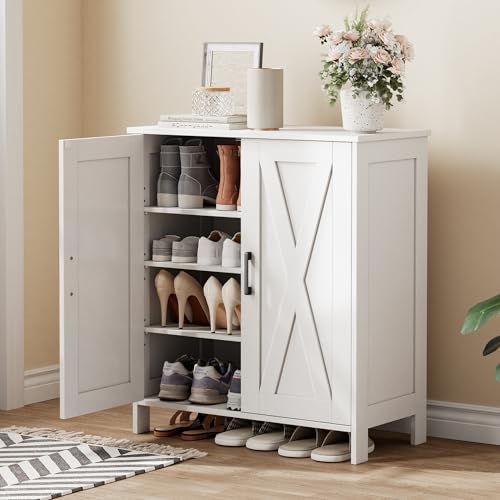
- Three adjustable shelves
- Two barn doors with black handles
- Stores shoes and everyday accessories
Best For: Decor-focused entryways needing flexible, enclosed storage
Best High-Capacity Rack
10-Tier Covered Shoe Organizer

- Stores approximately 40–50 pairs
- Removable dust-resistant cover
- Vertical design with boot-friendly adjustable tier
Best For: Large shoe collections in closets, dorms, and garages
Best Farmhouse Flip-Drawer Cabinet
Slim Barn-Door Shoe Storage Cabinet

- Two hidden flip drawers
- Removable dividers for flexible compartments
- Raised legs and fenced display top
Best For: Compact farmhouse-style entryways and hallways
Farmhouse Capacity Pick
3-Door Adjustable-Shelf Shoe Cabinet

- Stores about 30 pairs in six compartments
- Separate space for boots and heels
- Cross-molding doors with a useful countertop
Best For: Large entryways seeking enclosed, decorative shoe storage
Small-Space Style Pick
IRONCK Rattan Flip-Drawer Shoe Cabinet

- Slim 9.25-inch-deep design
- Adjustable storage for up to 22–35 pairs
- Walnut finish with hand-woven rattan fronts
Best For: Narrow entryways needing stylish, flexible storage
Best Narrow Pick
Space-Saving White Shoe Cabinet

- Slim 9.45-inch profile for tight entryways
- Adjustable shelves fit varied footwear
- Two flip doors conceal up to 16 pairs
Best For: Small hallways and compact entryways
Best High-Capacity Pick
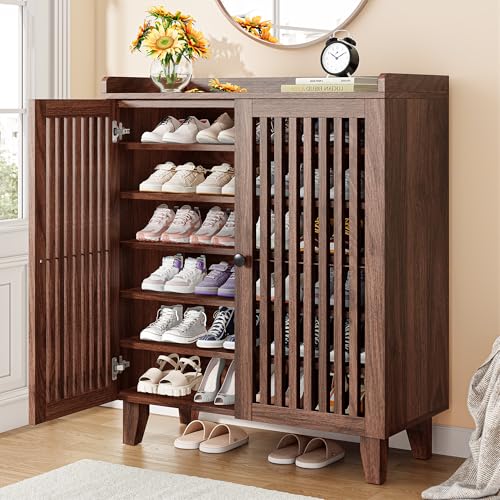
- Six tiers for approximately 24–35 pairs
- Adjustable shelves fit boots and varied footwear
- Slatted doors support airflow
Best For: Families and larger shoe collections
Best Style Pick
Arched Rattan Flip-Drawer Cabinet
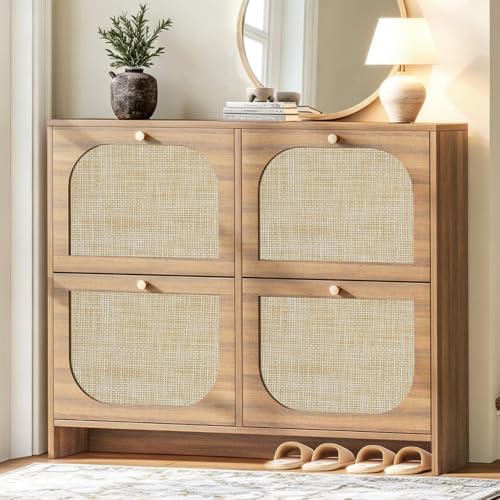
- Decorative arched rattan-inspired front
- Slim 9.4-inch profile saves walkway space
- Four flip drawers with adjustable dividers
Best For: Narrow entryways where style matters
Best Slim Flip-Drawer Cabinet – BORNOON 3-Drawer Shoe Cabinet
If you need shoe cabinets for a narrow entryway or hallway, the BORNOON model combines a compact 9.45-inch depth with three hidden flip drawers. Its adjustable and removable panels help accommodate different footwear while keeping shoes concealed.
Best For: Apartments, narrow entryways, hallways, closets, and households needing organized hidden storage for up to 18–24 pairs.
Pros:
- Three flip drawers provide space-saving access and concealed storage.
- Adjustable and removable panels accommodate sneakers, flats, heels, ankle boots, and slippers.
- Includes an anti-tip device and labeled parts for assembly.
Cons:
- The narrow 9.45-inch depth may limit storage for larger footwear.
- Engineered-wood construction requires assembly.
Choose this cabinet when a slim footprint and hidden shoe storage matter most. The walnut finish and top display shelf also make it practical for an entryway or foyer.
Best Farmhouse Cabinet – Farmhouse Shoe Cabinet with Barn Doors
Among shoe cabinets with a furniture-like appearance, this farmhouse cabinet stands out with two barn doors, white finish, and wood legs. Its adjustable shelving provides flexible storage for shoes and other everyday items in an entryway or living space.
Best For: Farmhouse-style entryways, hallways, living rooms, and closets needing storage for 15 or more pairs.
Pros:
- Three adjustable shelves allow storage to be tailored to different shoe sizes.
- Two barn doors hide contents and add rustic decorative appeal.
- Can also store bags, accessories, and daily essentials.
- Includes wall-anchoring hardware for added stability.
Cons:
- At 13.8 inches deep, it needs more floor space than a slim shoe cabinet.
- Assembly is required.
This is a good pick if you want shoe storage that looks like coordinated furniture rather than an open rack. The adjustable interior makes it more versatile than a fixed-compartment cabinet.
Best High-Capacity Rack – 10-Tier Covered Shoe Organizer
For shoppers prioritizing capacity over cabinet-style construction, this tall shoe rack offers 10 tiers and room for approximately 40–50 pairs. The removable waterproof cover helps protect footwear from dust while the vertical design limits its floor footprint.
Best For: Large footwear collections, closets, dorms, garages, bedrooms, and other spaces where vertical storage is useful.
Pros:
- Ten tiers provide high-capacity storage for approximately 40–50 pairs.
- Removable, waterproof cover helps shield shoes from dust and dirt.
- One tier can be removed to create space for long boots.
- Four cover pockets add storage for small accessories.
Cons:
- At 62.2 inches tall, it may not suit rooms with limited vertical clearance.
- The fabric-covered rack has a less furniture-like appearance than enclosed cabinets.
- Assembly and disassembly are required.
This rack is the practical choice for maximum shoe capacity in a relatively narrow footprint. Its cover and removable tier add useful flexibility for mixed footwear collections.
Best Farmhouse Flip-Drawer Cabinet – Slim Barn-Door Shoe Storage Cabinet
This slim shoe cabinet blends hidden flip-drawer storage with farmhouse styling. Its removable dividers, raised tapered legs, and top fence make it useful for compact entryways where you also want space for keys, décor, or a cleaning robot.
Best For: Narrow entryways, foyers, and hallways that need concealed shoe storage with decorative farmhouse details.
Pros:
- Two flip drawers keep shoes hidden while providing easy access.
- Removable dividers let you adjust compartment space for different footwear.
- Tapered legs elevate the cabinet and leave room underneath for slippers or cleaning robots.
- Top fence helps keep keys, plants, and ornaments from falling.
Cons:
- The cabinet has only two drawers and four compartments.
- Its 9.5-inch depth may restrict larger shoes.
- Assembly is required.
Consider this model when appearance and narrow dimensions are equally important. It offers more entryway-friendly features than a basic rack, including hidden storage, ventilation, and a useful display surface.
Farmhouse Capacity Pick – 3-Door Adjustable-Shelf Shoe Cabinet
For shoppers comparing shoe cabinets, this freestanding black model combines concealed storage with a decorative cross-molding design. Its six shelves can hold about 30 pairs, while the separate door section helps accommodate taller footwear such as boots and heels.
Best For: Entryways needing substantial, enclosed shoe storage with a farmhouse-inspired look.
Pros:
- Holds about 30 pairs, depending on shoe size.
- Adjustable shelves and a separate taller compartment support varied footwear.
- Spacious countertop provides room for keys, wallets, plants, or décor.
- Adjustable metal feet, soft-closing hinges, and engineered-wood construction add practical stability.
Cons:
- At 43.8 inches wide and 86.3 pounds, it requires more floor space and handling than a narrow cabinet.
- Assembly is more manageable with two people.
- Door gaps may require leveling the feet and adjusting the hinge screws.
This is a strong choice when capacity and a finished furniture appearance matter more than a compact footprint. Plan to level it carefully during setup for the best door alignment.
Small-Space Style Pick – IRONCK Rattan Flip-Drawer Shoe Cabinet
Among shoe cabinets for tight entryways, the IRONCK rattan model stands out for its slim 9.25-inch depth and warm walnut finish. Two flip drawers offer adjustable storage for up to 22–35 pairs, while the top surface keeps everyday items within reach.
Best For: Narrow hallways and entryways where a decorative, space-saving cabinet is important.
Pros:
- Slim profile helps conserve floor space.
- Adjustable or removable dividers accommodate different shoe sizes and styles.
- Increased width and depth fit men’s shoes up to size 11.5 without panel removal.
- Rattan fronts, metal legs, and an anti-tipping device combine style with practical support.
Cons:
- Its listed capacity varies from 22 to 35 pairs depending on footwear size and arrangement.
- The 31.49-inch width offers less total storage than wider cabinets.
- Assembly is required, although detailed instructions and illustrations are included.
The compact depth makes this a practical option for passageways where a conventional cabinet would protrude too far. Its adjustable interior is especially useful for households storing a mix of flats, sneakers, and boots.
Budget Flexible Pick – UNITSTAGE 7-Tier Enclosed Shoe Rack
This 7-tier shoe cabinet offers a lightweight, flexible approach to organizing up to 28 pairs of footwear. Its non-woven fabric cover and door help block dust and discourage pets from chewing shoes, while the modular structure can also be used for toys, handbags, hats, or clothing.
Best For: Closets, bedrooms, and utility areas needing lightweight enclosed storage that can be reconfigured.
Pros:
- Seven tiers provide space for up to 28 pairs and varied footwear, from heels to boots.
- Fabric enclosure helps protect shoes from dust and pets.
- Metal frame and plastic connectors create a compact, easy-to-clean organizer.
- Expandable design can be adapted for shoes, hats, clothes, toys, or handbags.
Cons:
- Non-woven fabric and plastic connectors offer a less furniture-like finish than engineered-wood cabinets.
- Every connector and plastic divider must be tightly secured during assembly.
- The supplied dimensions list a 27.76-inch depth, so verify the available floor space before ordering.
This model makes sense for flexible storage rather than a polished entryway centerpiece. Its enclosed fabric design is useful where dust and pet access are concerns, and its light construction can suit changing storage needs.
Best Narrow Pick – Space-Saving White Shoe Cabinet
For shoppers comparing shoe cabinets for a tight entryway or hallway, this white model offers a slim 9.45-inch depth while providing four tiers of enclosed storage. Its adjustable shelves and flip doors make it practical for organizing everyday footwear without leaving shoes exposed.
Best For: Small entryways, narrow hallways, and households needing concealed storage for up to 16 pairs.
Pros:
- Compact 9.45-inch depth suits tight spaces.
- Adjustable or removable shelves accommodate different shoe types, including heels and boots.
- Two flip doors help protect shoes from dust and pets.
- Includes an anti-tip kit and a top surface rated to support up to 60 pounds.
Cons:
- Capacity is lower than larger six-tier alternatives.
- Assembly is required.
This is a useful choice when floor space is limited and a clean, enclosed look matters. The top fence adds a convenient place for keys or small accessories, while the adjustable interior gives the cabinet more flexibility than its narrow profile suggests.
Best High-Capacity Pick – Walnut Slatted Shoe Cabinet
Among shoe cabinets for larger footwear collections, this walnut IRONCK cabinet stands out with six tiers and an estimated capacity of approximately 24 to 35 pairs. Its slatted doors add airflow, while the 14.7-inch depth is designed to fit shoes up to men’s size 13.
Best For: Families, larger shoe collections, and shoppers who want mid-century style with substantial enclosed storage.
Pros:
- Six-tier design holds approximately 24 to 35 pairs, depending on shoe size and style.
- Three adjustable or removable shelves can accommodate flats, heels, sneakers, and tall boots.
- Slatted doors allow air circulation to help shoes stay fresh.
- Solid wood legs and an anti-tip kit provide added stability.
Cons:
- At 14.7 inches deep, it needs more floor space than ultra-slim cabinets.
- Assembly takes about 40 minutes for two people.
This cabinet is the stronger fit when storage capacity takes priority over the smallest possible footprint. The walnut finish and slatted front also make it suitable for living areas, closets, and entryways where the cabinet remains visible.
Best Style Pick – Arched Rattan Flip-Drawer Cabinet
If you want shoe cabinets that contribute to an entryway’s decor, this Nicetree model combines an arched rattan-inspired front, brass handles, and a weathered amber oak finish with concealed storage. Its 9.4-inch profile keeps the cabinet narrow, while four flip drawers organize shoes for the household.
Best For: Style-conscious shoppers furnishing narrow entryways, foyers, or small apartments.
Pros:
- Ultra-slim 9.4-inch depth helps preserve walkway space.
- Four flip drawers and three adjustable, removable dividers provide flexible organization.
- Designed to fit up to men’s size 12, with capacity varying by shoe profile.
- Includes anti-tip hardware for both sides, plus video-guided assembly support.
Cons:
- Its stated size limit may not suit households with larger footwear.
- Capacity varies depending on shoe size and shape.
- Assembly is still required, even though the build is designed for about 30 minutes.
This cabinet is a compelling balance of narrow storage and decorative appeal. The wipe-clean surface and enclosed flip drawers make it practical for busy entryways, while the rattan-style design gives it more visual character than a basic shoe rack.
How We Picked These Shoe Cabinets
We evaluated these Shoe Cabinets around the needs that matter most in daily use: usable capacity, cabinet dimensions, access to frequently worn pairs, shelf flexibility, ventilation, stability, and overall design. The selection includes narrow models for apartments, taller racks for larger collections, and enclosed cabinets that create a cleaner-looking entryway.
We also considered how each format handles different footwear. Flip drawers are convenient and space-efficient, while adjustable shelves are more adaptable for boots, sneakers, and larger sizes. Covered racks can offer high capacity at a lower visual and financial footprint, but they may provide less structure than a dedicated cabinet.
Quick Comparison
| Best For | Recommended Style | Why It Works |
|---|---|---|
| Small entryways | Narrow flip-drawer cabinet | Uses vertical space while keeping the floor clear |
| Large shoe collections | Tall multi-tier rack or cabinet | Provides higher capacity without requiring a wide footprint |
| Decor-focused rooms | Enclosed farmhouse or rattan cabinet | Hides footwear and complements existing furniture |
| Mixed shoe sizes | Adjustable-shelf cabinet | Allows taller compartments for boots and bulky shoes |
Key Buying Factors for Shoe Cabinets
Measure the Available Space
Check width, depth, and height before ordering, including clearance for doors, drawers, baseboards, and nearby furniture. A slim cabinet is useful only if its drawers or flip doors can open fully.
Match Capacity to Your Collection
Advertised pair counts are estimates and may assume low-profile footwear. Sneakers, work shoes, boots, and larger sizes take more room, so choose extra capacity if you want to avoid overcrowded compartments.
Choose the Right Access Style
Flip drawers provide quick access and a tidy front profile. Hinged doors can offer broader shelf access, while open or covered racks make it easier to see and retrieve shoes. Enclosed storage is generally better for keeping visual clutter and dust under control.
Look for Adjustability and Ventilation
Adjustable or removable shelves make a cabinet more versatile. Ventilation is also helpful when storing shoes after regular wear, particularly in fully enclosed designs.
Prioritize Stability and Assembly
Tall storage should be placed on a level surface and secured when recommended. Review the assembly requirements, included hardware, and frame materials, especially for cabinets intended for busy family entryways.
Who Should Buy Which Shoe Cabinets?
Choose a narrow flip-drawer model if you live in a compact apartment or need a low-profile solution near the door. Families and serious footwear collectors should look toward taller seven-tier or covered rack designs, or cabinets with several drawers and adjustable shelving.
For a coordinated, furniture-like appearance, farmhouse, walnut, and rattan-style cabinets are strong choices. If flexibility matters more than appearance, select a design with adjustable shelves. Buyers who want shoes hidden from view should prioritize enclosed doors or drawers, while those who value quick access may prefer an open or covered rack.
Before purchasing, compare the cabinet’s external dimensions with its actual usable compartments, then leave some spare capacity for seasonal footwear. The best Shoe Cabinets are the ones that fit your entryway, match your storage habits, and remain easy to use every day.